
Sewing thread dyeing is a significant part of the textile industry, and the uniformity of colors, the stability of the dyeing process, and the utilization of resources all have an impact on the final product. Manufacturers require equipment that will provide consistent colour results from different types of thread, in various batch sizes and production schedules. Buyers should look at factors like capacity, temperature control, dye circulation, material compatibility, energy consumption, and maintenance when assessing Sewing Thread Dyeing Machine Manufacturers in Noida. Process variation can be minimised with appropriate equipment and smoother production can be achieved where colour consistency and delivery schedules are critical.
Businesses looking into machinery for dyeing textiles can consider Unimech Engineers. Machines can vary in vessel design, loading arrangements, level of automation, batch size and control systems, which all affect their suitability for a facility. Buyers should first determine the process challenges, compare the practical features and determine which improvements are most important before selecting equipment. A clear selection process helps to align production and investment based on production goals rather than on the basis of price or general claims.
The factors influencing thread dyeing are dye concentration, temperature, time of processing, liquor movement, and loading of thread. If control is poor, it can result in uneven dyeing or shade differences, which can result in reprocessing, waste, and delays.Production teams are also required to manage various types of threads, manage energy, water, labour and maintenance costs. If the capacity is not matched well, it may become difficult to schedule the operations when the demand fluctuates. Therefore, buyers need to consider the purchase price, process stability and after-sales support.
Firstly, specify the materials of the thread, the batch size, the colour range, production volume, and quality requirements. These details assist buyers to compare the capacity, heating, circulation, controls, and loading methods. Equipment should be based on current workflow, not on a future need.Check installation requirements, safety measures, cleaning procedures, spares availability and maintenance assistance. Settings between batches are maintained and deviations are identified early as a result of staff training and clear procedures. Combining machinery, operators and process controls can provide greater consistency and reduce downtime.
The textile industry can benefit from modern dyeing equipment to ensure more consistent and organized colour processing. Depending on the design, it can be used for controlled heating, effective dye circulation, repeatable settings and monitoring. These features can be helpful when working with multiple thread types or when time is of the essence. By comparing Sewing Thread Dyeing Machine Suppliers In India, buyers can evaluate the configuration, capacity, controls, and service arrangements to meet their production requirements.
Practical benefits:-
The results are dependent on proper sizing, appropriate settings, operator training and maintenance. It is the buyer's responsibility to compare the performance with his materials and production targets. An appropriate system can enable reliable output and assist teams in managing resources and production time.
Verify the material of the threads, the capacity of the batch, the shade range, the production frequency and the installation space. Buyers should also consider the temperature accuracy, dye circulation, loading, controls, cleaning access and safety features to see if the equipment is appropriate for the production line.
Also check operating costs, service, spare parts and maintenance. Yarn Dyeing Machine Exporters In India should be considered by businesses when evaluating textile processing machinery. The final selection, however, should be appropriate for the process, material, product, and technical assistance needed.
Textile and Garment Applications
Sewing thread dyeing machines are used in textile units that produce sewing thread for clothing, upholstery, home textiles, shoes and other stitched materials. The configuration is determined by the composition of the threads, the batch size, the desired shade and the volume of production.
Supporting Connected Processes
Routine schedules and various colour orders are possible with suitable systems. They can also be a component of larger processes such as yarn preparation, dyeing, drying, winding, and quality control.
Machinery Selection
Businesses that are considering the overall processing lines can make comparisons with Yarn Dyeing Machine Exporters in India. Choosing the right equipment helps ensure that product specifications and space requirements are met without the inclusion of unnecessary complexities.It can also be combined with other steps in the yarn preparation, dyeing, drying, winding and quality control.
Why Choose Unimech Engineers
When considering machinery for textile processing, Unimech Engineers can be considered. Potential buyers should assess technical specifications, customization options, installation needs, and service agreements to determine suitability for their facility. Providing supplier with thread type, batch volume and production targets can help make supplier discussions more productive.
Consider capacity, controls, construction, energy requirements, maintenance access and after sales support when comparing Sewing Thread Dyeing Machine Manufacturers In Noida. These factors enable buyers to make a practical choice rather than a purely price decision, based on production requirements.
Why Consistency Matters in Thread Dyeing
Uniform dyeing helps to maintain the appearance and usability of the finished textile products. The shade variation can lead to quality issues, production delays, and inspection/reprocessing. Good process control enables businesses to meet colour standards and deliver orders reliably.
Machine performance is not the only consideration. Appropriate dye formulations, trained personnel, maintenance and documented checks also are important. These practices and suitable equipment improve reliability and resource utilization.
Dyeing Technology Trends Shaping 2026
Process control, resource utilization, automation and repeatable quality are now more important to the textile processors. New systems can provide better temperature control, set up options, monitoring and circulation.
Another thing that buyers look into when comparing Sewing Thread Dyeing Machine Suppliers In India is service support, spare parts and operating cost. Equipment selection is now based more on reliability and production requirements that can be measured than on features. Where machines are running frequent batches, energy monitoring and ease of maintenance can also impact decisions.
When selecting Sewing Thread Dyeing Machine Manufacturers In Noida, factors such as capacity, compatibility of threads, temperature control, dye circulation, operating expenses, maintenance, and support should be taken into account. Purchasing equipment should be based on actual production requirements, not on initial cost. A perfectly sized machine can help to enhance batch uniformity and minimize unnecessary downtimes.
Unimech Engineers should be taken into consideration when considering textile processing options. By taking a look at technical information, installation needs, and service plans, buyers can make educated decisions. Reliable operation with production requirements changing through careful selection and regular maintenance.
1. What does a sewing thread dyeing machine do?
It dyes sewing thread under controlled conditions to get the desired colour.
2. What should buyers discuss with Sewing Thread Machine makers?
Talk to them about batch size, thread material, controls, installation and maintenance.
3. What should buyers check before purchasing?
Evaluate capacity, thread type, controls, energy consumption, maintenance and service support.
4. Why compare sewing thread dyeing machine suppliers?
A comparison of suppliers enables the buyers to look at the specifications, capacity, support, and operating requirements.
5. Why consider Unimech Engineers?
Unimech Engineers can be assessed based on technical and production requirements.

Sewing thread dyeing is a significant part of the textile industry, and the uniformity of colors, the stability of the dyeing process, and the utilization of resources all have an impact on the final product.
Read More
Controlled temperature, uniform dye penetration, and equipment that can accommodate challenging production schedules are all essential to the textile processing process.
Read More
The uniform dyeing of textiles, controlled processing and efficient handling of yarn packages are essential for modern textile production.
Read More
HTHP tubular zipper tape dyeing machines are engineered for textile dyeing applications .
Read More
Beaker dyeing machines are laboratory dyeing systems that can be used for testing colour, dye behaviour and textile samples under controlled conditions.
Read More
Hydro extraction is a significant textile-processing step to remove excess water from fabrics after washing, dyeing and rinsing.
Read More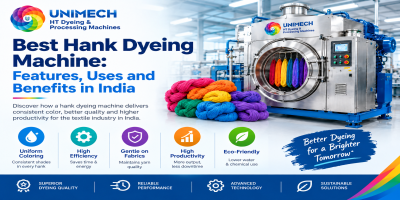
A Hank dyeing machine is a kind of equipment used to dye yarn in the textile industry, which can dye the yarn evenly and provide appropriate control of colour penetration and treatment conditions.
Read More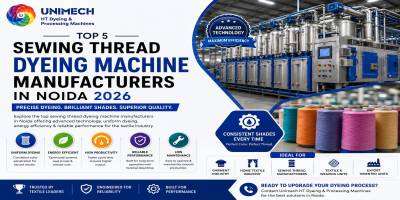
In the textile and garment industry, sewing thread dyeing is a crucial process in producing high-quality and consistent thread
Read More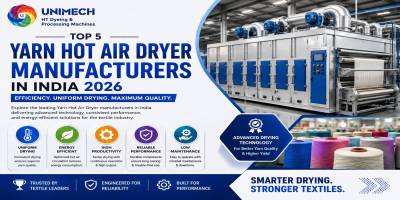
Yarn hot air dryers are essential equipment in textile processing, which are used for drying the yarn after dyeing, washing, and other wet processing.
Read More
Dyeing is a vital operation in the textile industry, because it plays a significant part in the color, appearance, quality and overall finish of the yarn and fabric.
Read More
The textile industry is evolving fast and the requirements for the industry are rising for precision dyeing
Read More
The textile sector has experienced an amazing transformation in the last ten years.
Read More
The textile industry operates on the principles of speed, precision and sustainability.
Read More
The textile industry is moving fast with the advanced level of automation and modern dyeing technology. Yarn dyeing machines are one of the significant technological innovations that have contributed to the production of high-quality yarns
Read More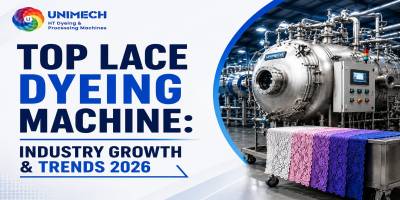
The textile processing industry is being revolutionized by the innovative capabilities of theLace Dyeing Machine Manufacturers, in their efforts to achieve greater automation, energy efficiency, and precision in dyeing.
Read More
Textile producers are increasingly interested in innovative dyeing technologies with high performance and reduced costs, aiming to enhance production quality and efficiency.
Read More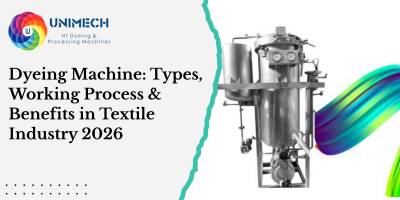
The textile industry relies heavily on advanced machinery to produce high-quality fabrics and yarns. One of the most essential technologies in textile processing is the Dyeing Machine, which ensures consistent color application on fibers, yarn, or fabric. With the rapid advancement of textile manufacturing in 2026.
Read More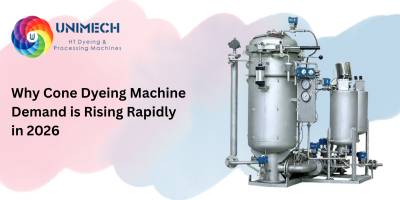
The textile industry is evolving quickly due to automation, sustainability requirements, and global demand for high-quality dyed yarns. In this transformation, the Cone Dyeing Machine has become one of the most important pieces
Read More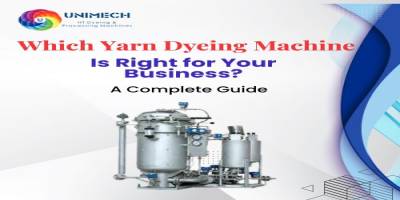
Running a textile business is not easy. One of the most important decisions is choosing the right yarn dyeing machine. The machine you pick affects how fast you can work, how good the colors look, and how much it costs to run your business.
Read More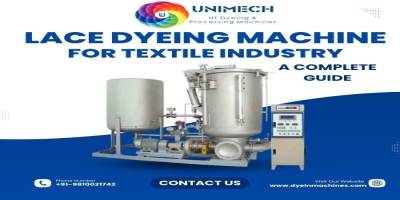
The textile industry depends on modern machines to make fabrics look attractive and high-quality. Dyeing is one of the most important processes in this journey. For delicate fabrics like lace, the dyeing process needs extra care. This is where the Lace Dyeing Machine becomes an essential tool for textile businesses.
Read More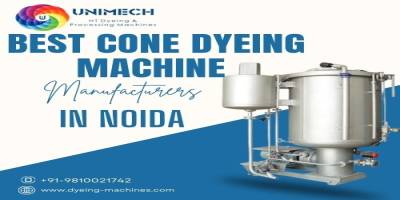
The textile field has seen many new developments over the past few years. Today, businesses need speed, consistency, and quality to stay ahead. One machine that makes a big difference in yarn processing is the Cone Dyeing Machine. It plays a key role in giving yarns rich, uniform colors that last.
Read More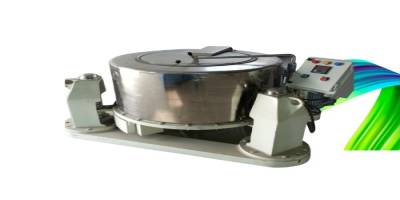
We are the top Hydro Extractor Machine Manufacturers in Noida. Among all the important machines in the textile and laundry industries, the hydro extractor machine removes excess water from fabrics, yarns, or clothes. The centrifugal force produced at a very high speed by the machine efficiently reduces the moisture content and thereby gets the materials ready for other subsequent processes like drying or finishing. Proper selection of a hydro extractor machine is one of the major decisions to be made, as productivity, efficiency, and quality of the end product will directly depend upon this selection. The following guide takes you through the things to look at before making a choice of investment in hydro extractor machines.
Read More
Since the modern machinery of yarn dyeing has been equipped with computerized automated systems, it results significantly in enhancing the efficiency, accuracy, and sustenance of the entire drying process. This aspect happens to be particularly useful for textile manufacturers operating projects on large scales that always require consistency in the dyeing of colour and quality. We are the most reliable Yarn Dyeing Machine Manufacturers in Noida. This approach has not only saved extra labour and time in general but has also helped the segment overcome some major setbacks brought about by the old procedures of manual dyeing.
Read More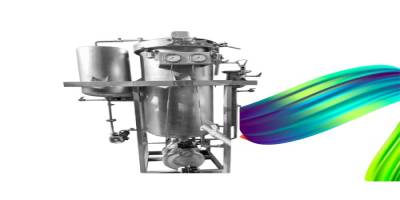
Yarn dyeing has been one of the crucial steps of textile manufacturing, whereby yarn attains colourful shades that form a beautiful fabric. Such processes constitute the heart of yarn-dyeing machines, which help achieve even and effective yarn dyeing. These machines are essential in industries needing high-quality and precisely coloured textiles while sustaining large-scale production capacity. Choose Unimech Engineers Pvt Ltdin case you are in search of Dyeing Machine Suppliers in India.
Read More
Hank Dyeing Machines are used in the textile industry and contribute largely to providing quality results by using yarning of delicate processes coupled with a shiny, even dye appearance. These are those machines designed to dye yarns, especially in their "hank" form, loose skeins in a process basically considered similar to what has been enacted upon, done these years that guarantee to come up with equal dispensations of dyes, standing across as rich, superior shades. Hank dyeing is normally used on natural fibres, such as wool, silk, and cotton since these require more gentle treatment to maintain their structure and softness.
Read More